After nearly seven years to the day, I’ve finally come back to India.
This also means that its been nearly seven years to the day that I’ve actually consistently done some proper writing. And I am excited. I finally feel like I have a real project to start up again. And by that I mean writing this series, not my multiple weddings.
We’re starting off our journey in Brussels and the gentle trek we took to reach our first destination in Siswa Bazar — my ancestral home. It’s been even longer since I’ve been there. This time I’m taking my soon to be in-laws and my fiancé, Jean.
It’s his first ever time in India. And to immediately bring him to Siswa may have been slightly questionable, but I had no doubts that he’d be completely fine (spoiler alert: he’s more Indian than I am).
Right so. We had decided ages ago to fly Lufthansa. What we didn’t know was that this would be the most populous flight to land in Delhi the night we did.
Getting off the plane, immigration (yay to OCI cards), all that was no issues. Actually getting our luggage? We waited 2 hours.
TWO HOURS.
We were LITERALLY the last to get our luggage.
At this stage it was 3am. No worries, we only had to wake up at 8am to catch our 10am flight to Siswa. Lucky for us we got an airport hotel that was in the domestic terminal so we could leave immediately.
By the way, at this stage we were together with Jeans parents — traveling with in-laws, to a country with completely different customs, that is kind of your own home country, is a whole other level.
Okay a few things of note here for your travels to India, and this pertains particularly just to arriving in New Delhi:
- Get an e-visa and make sure you receive a code or are able to print out the confirmation
- Make sure you fill in the e-arrival card AHEAD of arriving and have the QR code easily available
- If you’re staying at the airport hotel, make sure that it is in the same terminal as your next departing flight and you MUST have your departure flight details available!
- Security at the airport (any airport in this country) is no joke, they take it very seriously. You are only allowed to be in the airport if you have a valid ticket.
- Men and women go through separate screenings — women go into a separate cabin for privacy to be checked (this is normal, they just run the little scanner thing over you and ask you where you’re going)
- It will feel chaotic getting on to your domestic flight — just stand your ground and point out to people that you are in a line and they should not be allowed to cut in front of you.
- If you’re approached by anyone for taxis, guides, food, clothing whatever, never say “it’s okay” because that does not mean “NO.” You need to be firm and say “no thank you.” (Ok this last one is a little more general but you catch my drift).
After about 24 hours of traveling, we make it to Siswa Bazar. It should have been about 18, but with the luggage taking 2 hours, the finding the airport hotel for 1 hour, the sleeping for 3 hours, the other luggage in Siswa taking 1 hour, the 3 hours of absolutely (sincerely) unexpected traffic from Gorakhpur (landing) to Siswa, but we made it!
Note: Jean thinks I should elaborate on the actual drive from Gorakhpur Airport to Siswa Bazar. So, 9 out of 10 times, the drive takes about 1.5 hours — normal, because India is a reasonably large country.
Except.
I’m fairly certain the universe thought that Jean should see all of what India has to offer and decided to slow us down to a 3 hour drive: we saw commuter trains, we saw goods trains (read: this means that railroad crossings were blocked TWICE).
The duration of the entire drive was quite literally unheard of. It really was a treat to experience.
(This won’t be your experience).
And then finally, we see the metaphoric gates of URJA-ENERGY, my mothers’ NGO and center where we’d be spending the next few days. The NGO has worked hard to bring Siswa and surrounding villages into the 21st century. Take a look at the website: https://www.urja-energy.org/.
This really felt like a homecoming. The moment we arrived I instantly felt at peace. Sure, its a village (note from Jean: this place is NOT a village, it has 30,000+ inhabitants, this cannot be considered a village) and its a bit noisy, what with the trains blaring once in a while and the multiple ongoing weddings, but it really made me happy to be back.
Granted, it probably had to do with the fact that my mother had worked endlessly to make it like that. I mean there is a reason why my parents go there for two months out of the year every year — my father discovers new skills like bird watching and farm watching (not farming, but you know, he watches the farm land do its thing). And his latest endeavour in Siswa is my mothers own personal barista.
Okay so I realize that the title of this series is “the lazy persons guide to getting married” and I haven’t exactly talked about that at all but bear with me — I’m getting to it. Remember, this entire trip is with taking place with my in-laws, my parents and Jean. So while we’re working on getting the details down for the wedding, we also need to remember that this is their first time in a village.
But honestly? I expected stress, discomfort, homesickness, missing beef-ness. And Jeans only comment was “it’s the first time I’ve ever been the only white person in the room so that was new.”
Yeah that’s fair.
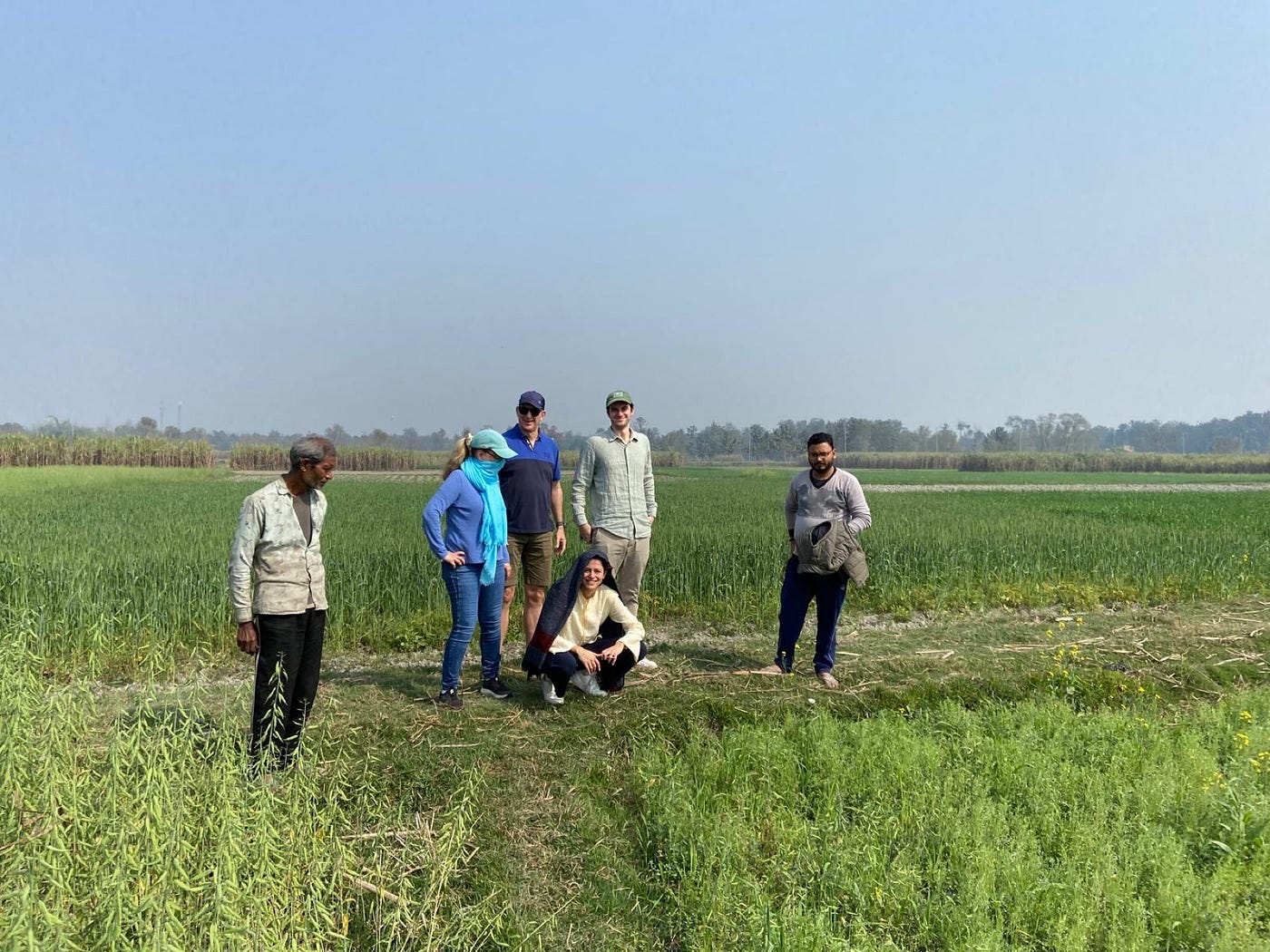
Oh yeah! Jean discovered a new allergy: marigold. I mean I guess how else would he have discovered this if not in India. Marigold in French is literally “œillets d’Inde” so no big surprise he’d never have been in close contact before. But so that was a nice little discovery. It’s not like we wanted our wedding flowers to be marigold or anything.
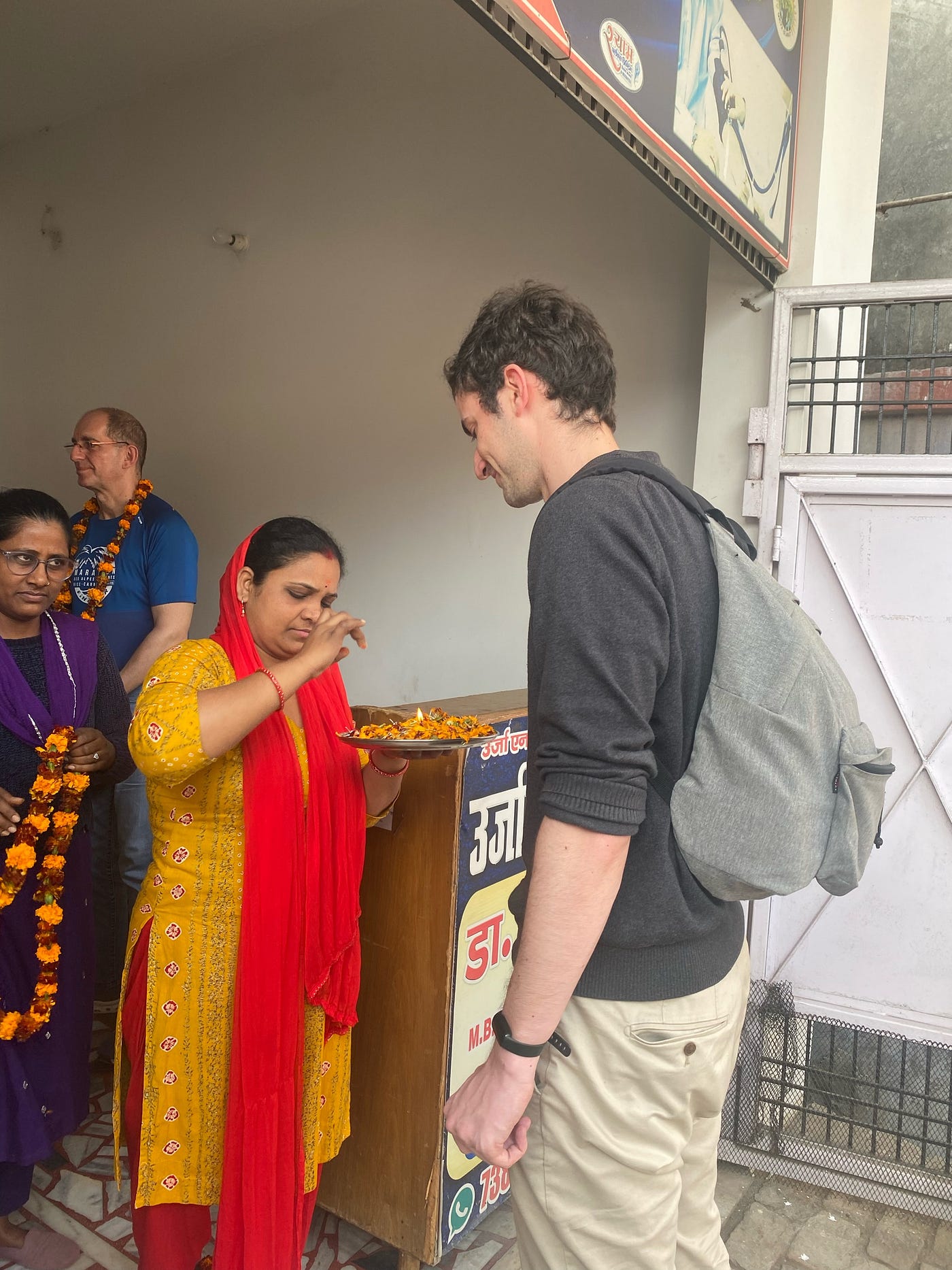
So here we are, in Siswa Bazar, we are greeted by the lovely people of the NGO who bless us with a traditional welcome that involves placing a marigold around our necks and then the next day bam: Jean’s neck is covered in red spots, he’s got a throat ache, blocked nose. Lovely.
My favorite part is we can see the progression of the rash through the pictures. Yeah I’m not going to bore you with those here. But just trust me on this.
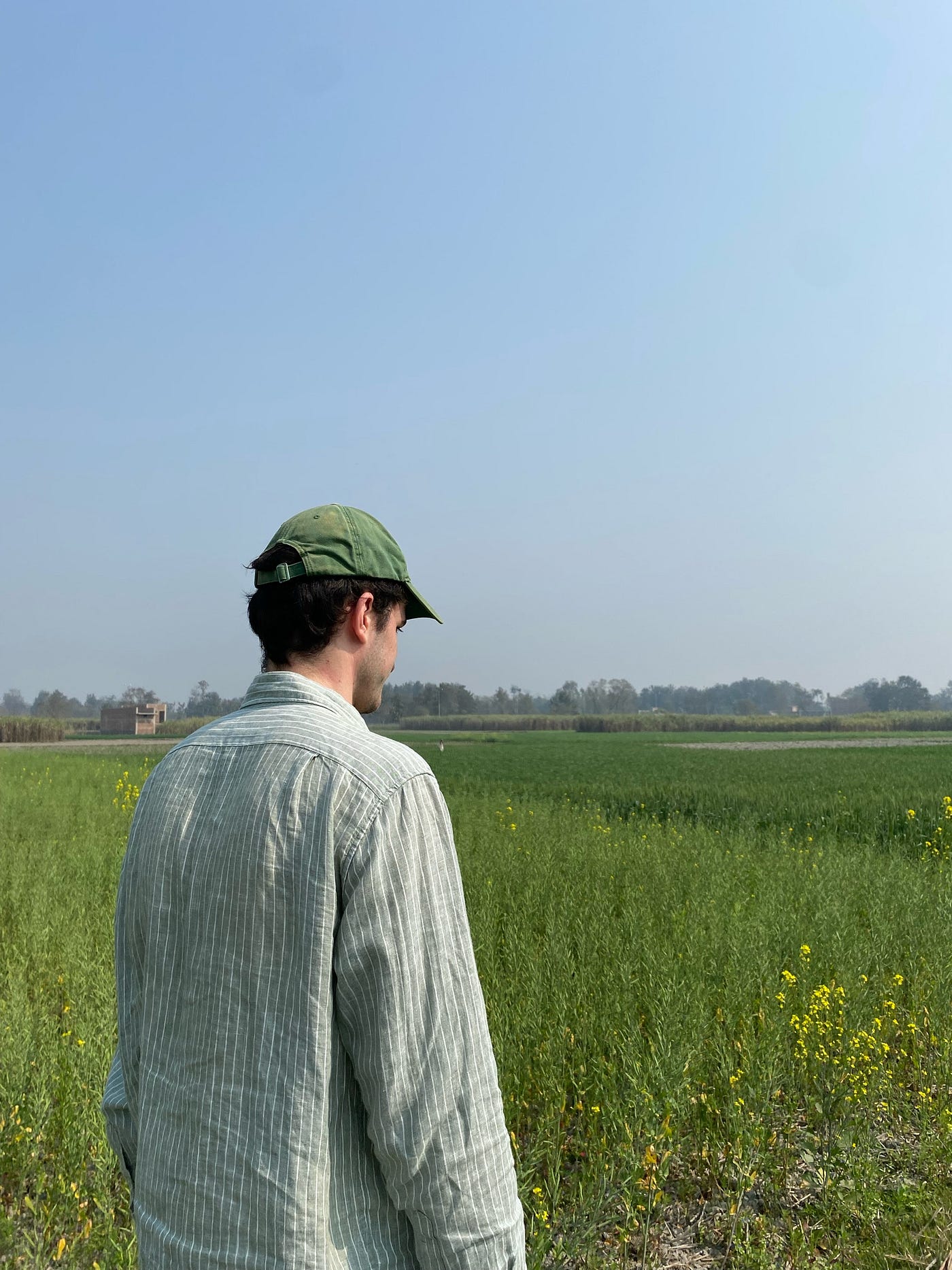
This man. Really. We’ve got two options now for our wedding: either we change the flowers or he just sucks it up. Should we lean towards the second option? Maybe?
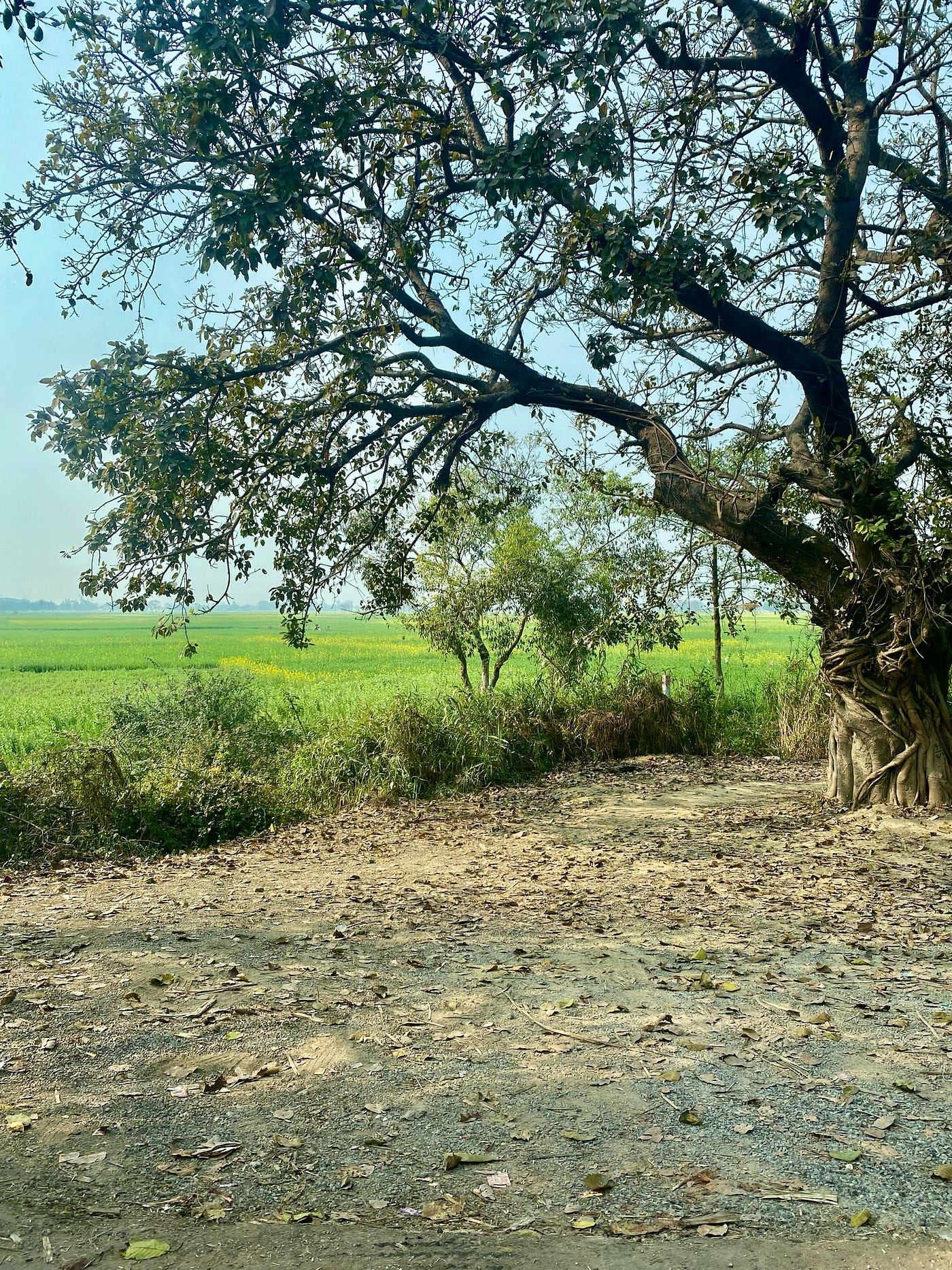
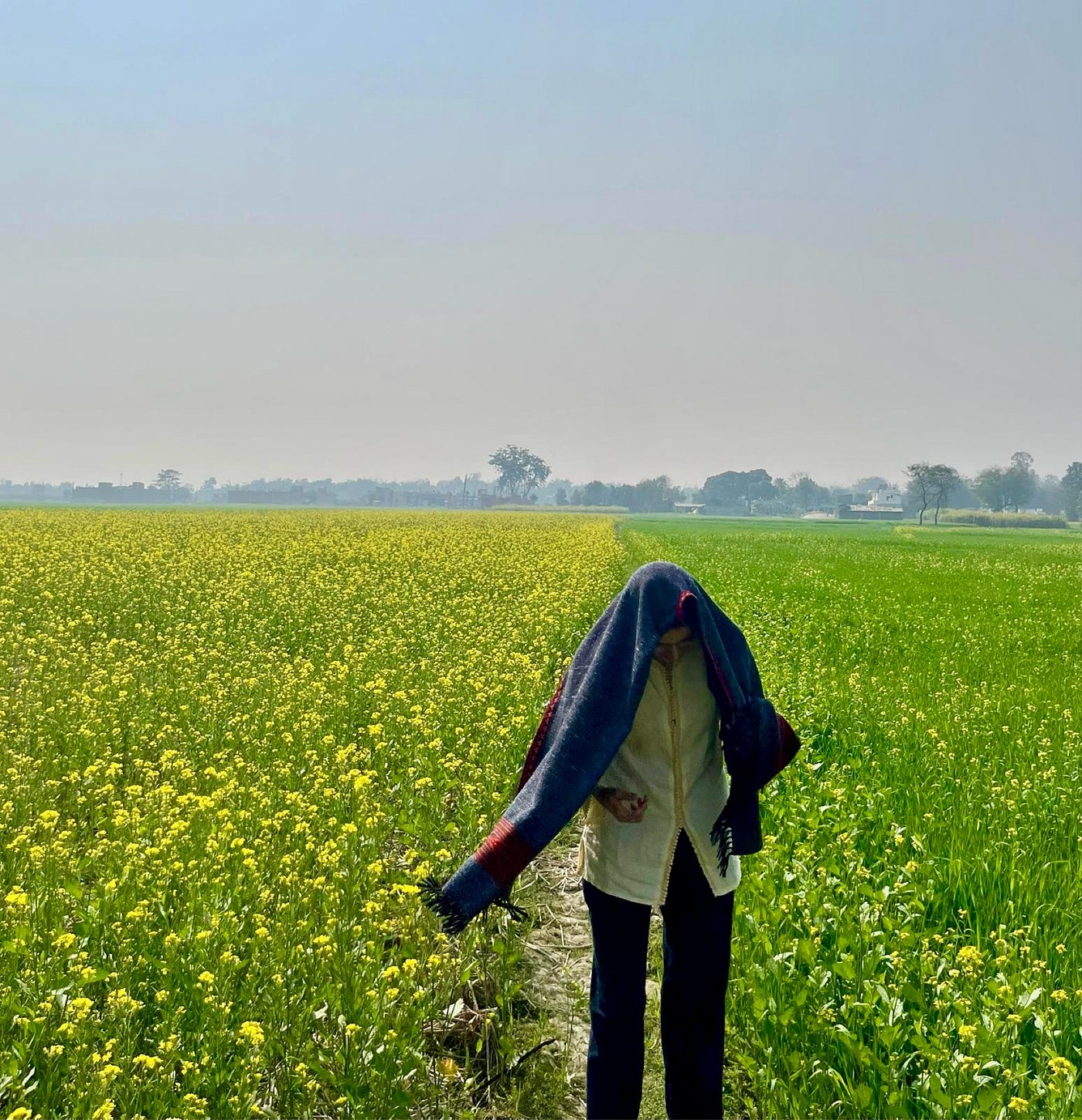
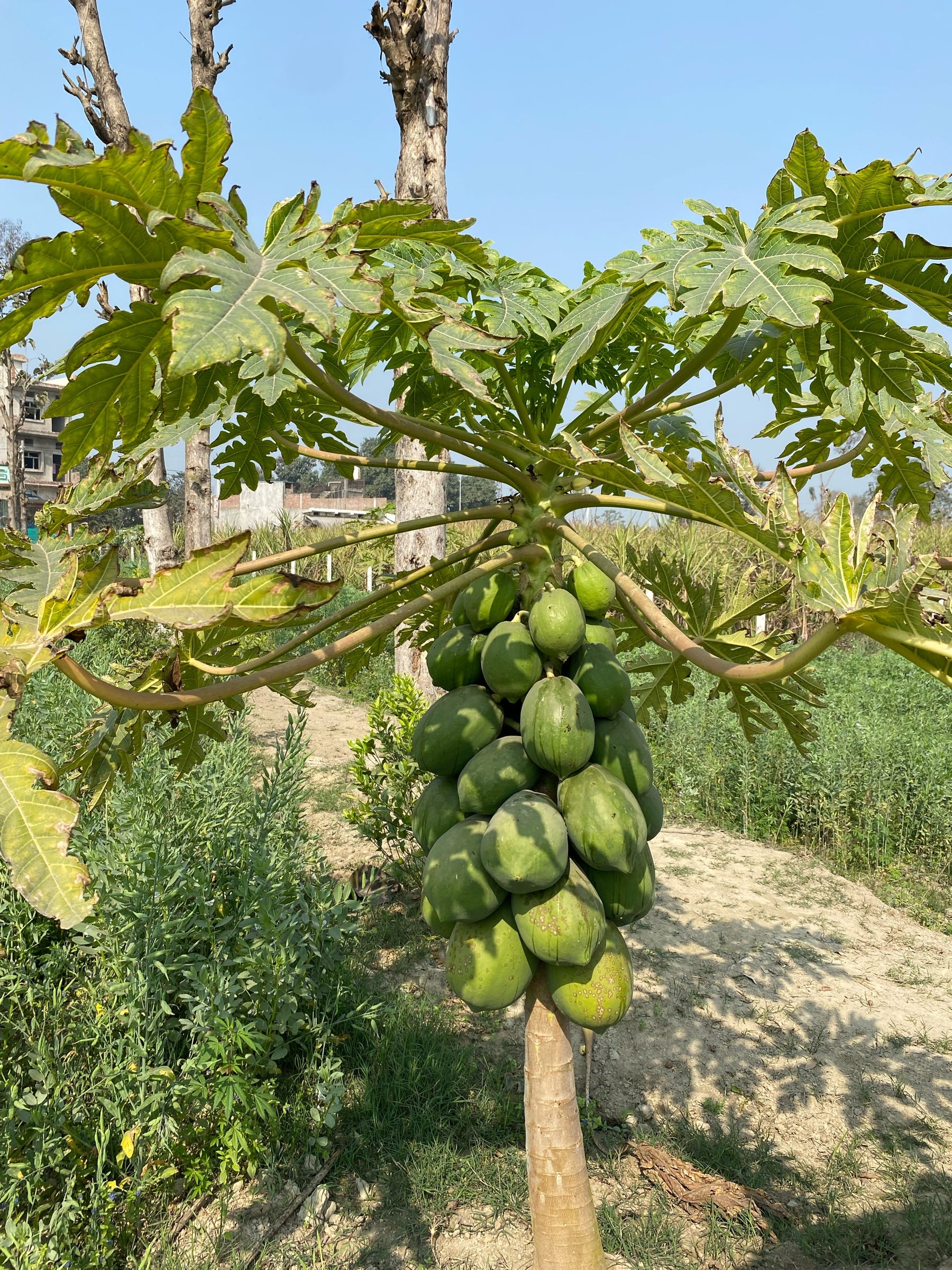
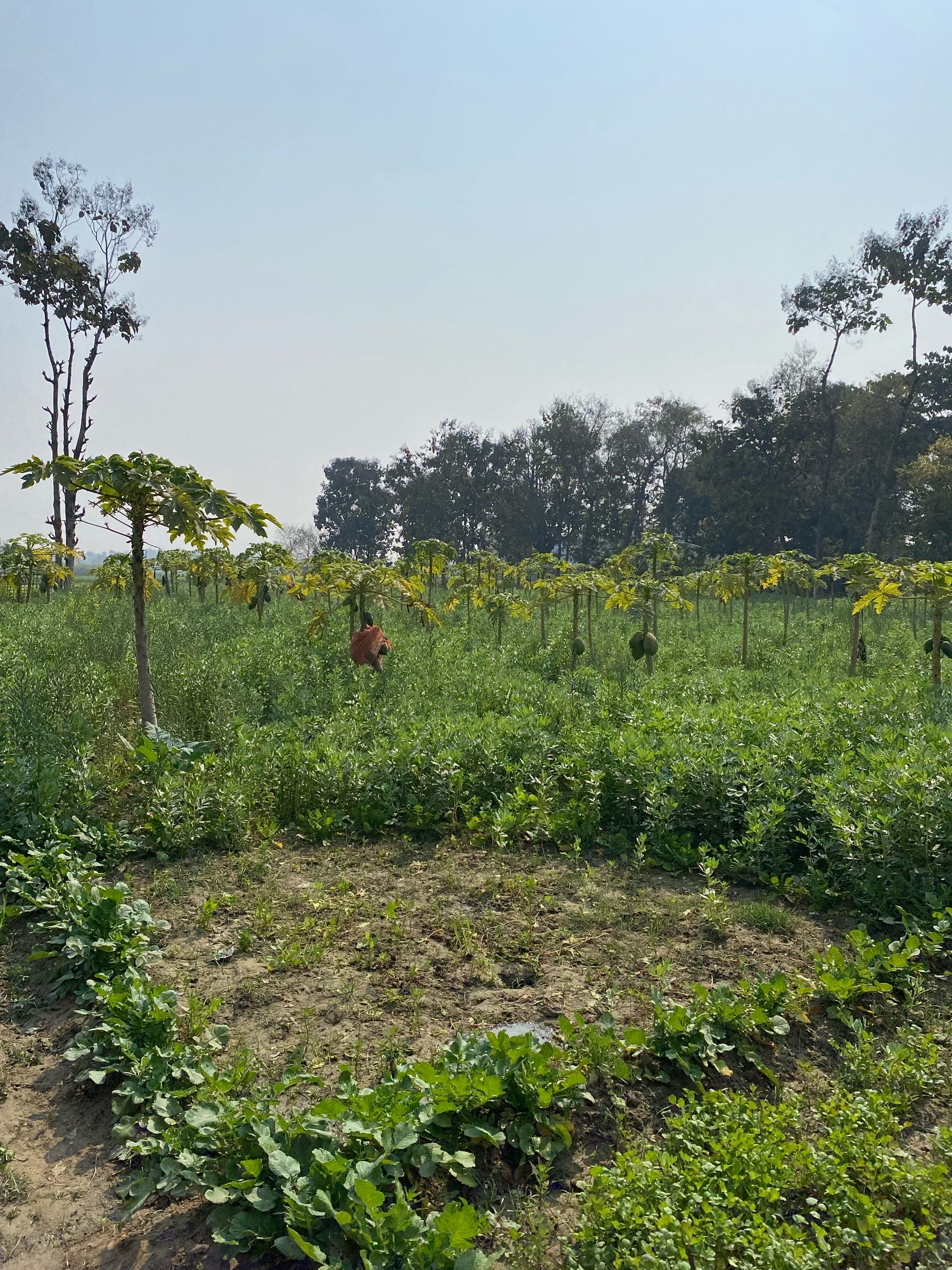
Anyway. Here are some pictures of Siswa and the fields from the NGO. It grows mostly mustard, papayas, rice (a special strain called Kala Namak that is only found in that region, that used to be grown and eaten by Buddha’s father).
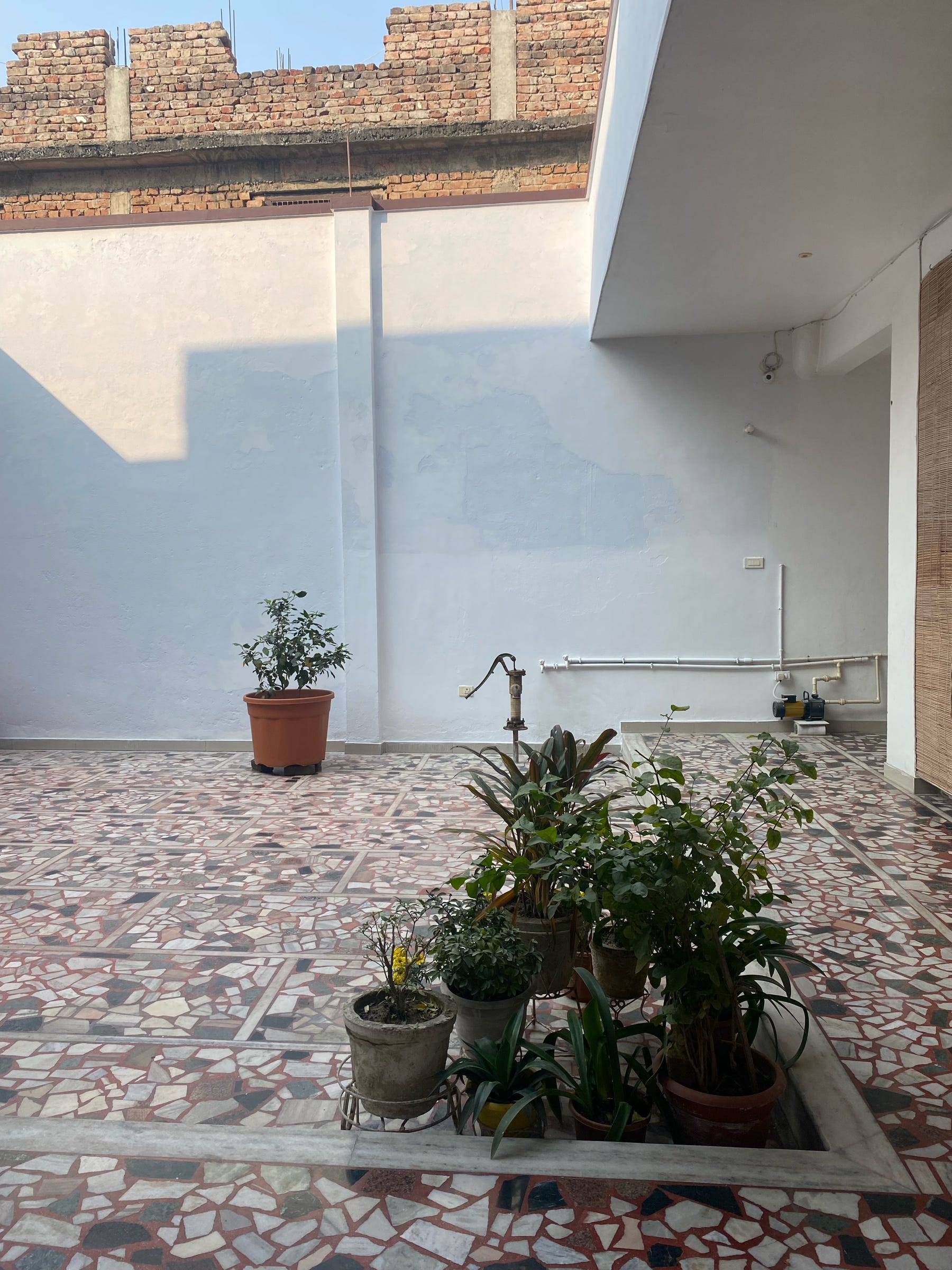
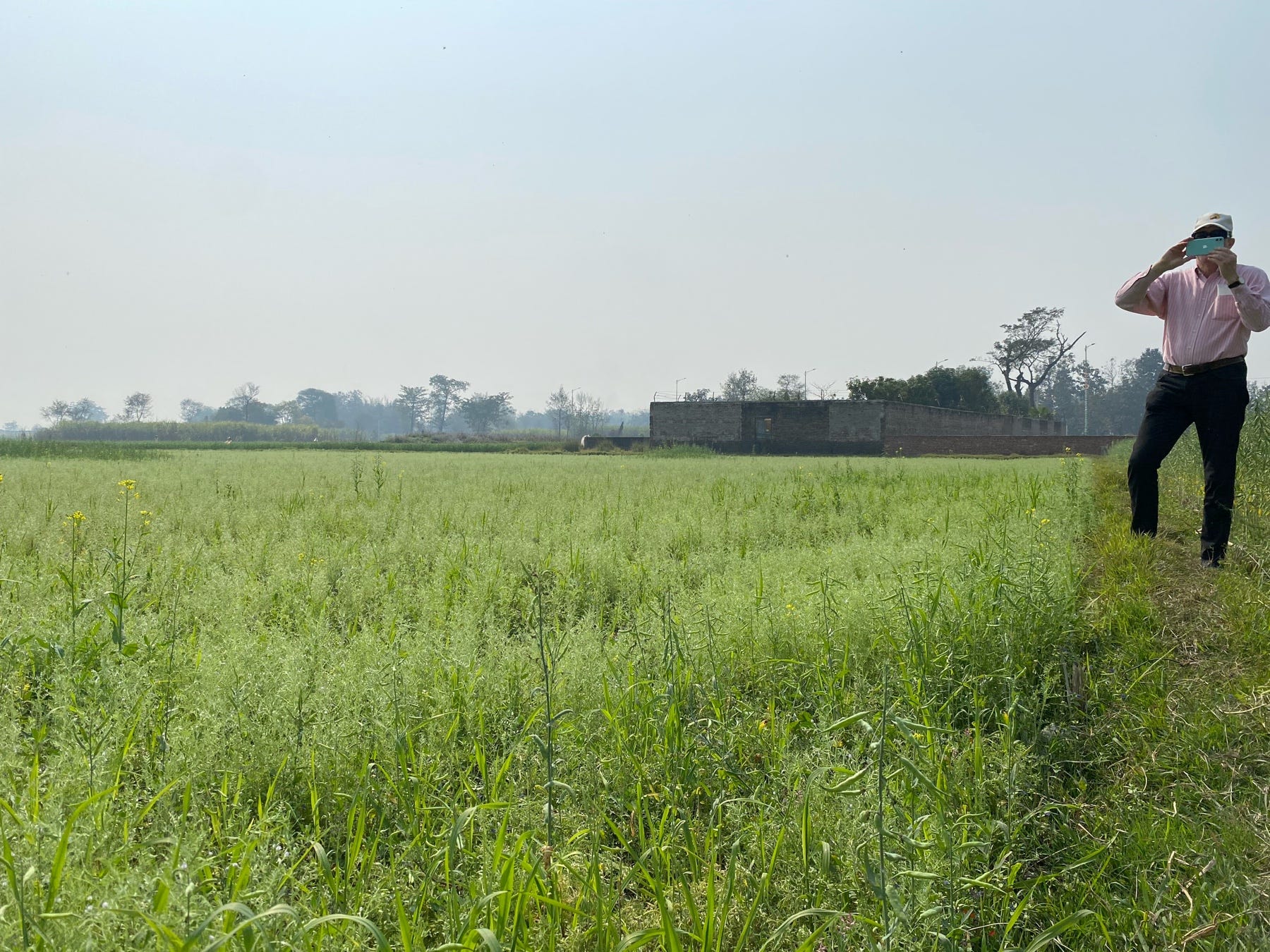
Right right so: weddings.
Siswa Bazar will be where we do our very intimate, close family only gathering. My primary objective with this is to honor my grandparents who come from here, my ancestors, who are no longer with us. I want to have them be present in whatever way we can.
What are the ceremonies we’ll do exactly? That’s a great question. I’m not sure about the namings as yet, but there will be an altar on which Jean and I will sit with our families and we’ll walk around a fire seven times — this signifies the unity in our familes.
This is turning into quite the long post for just 2 days, so I’ll start rounding of here. Our next stop is Kushinagar — Buddha’s place of death where we had a special treat.
A few special mentions for Siswa:
- The food. My god. I have missed the food. I just. I just missed it so much — you just don’t ever get tired of it.
- I was a little worried that Jean might find it too much. Yeah. No. That concern was immediately rebuffed.
- I need to rename this series to something else
Join me next time for our adventures in Kushinagar.
